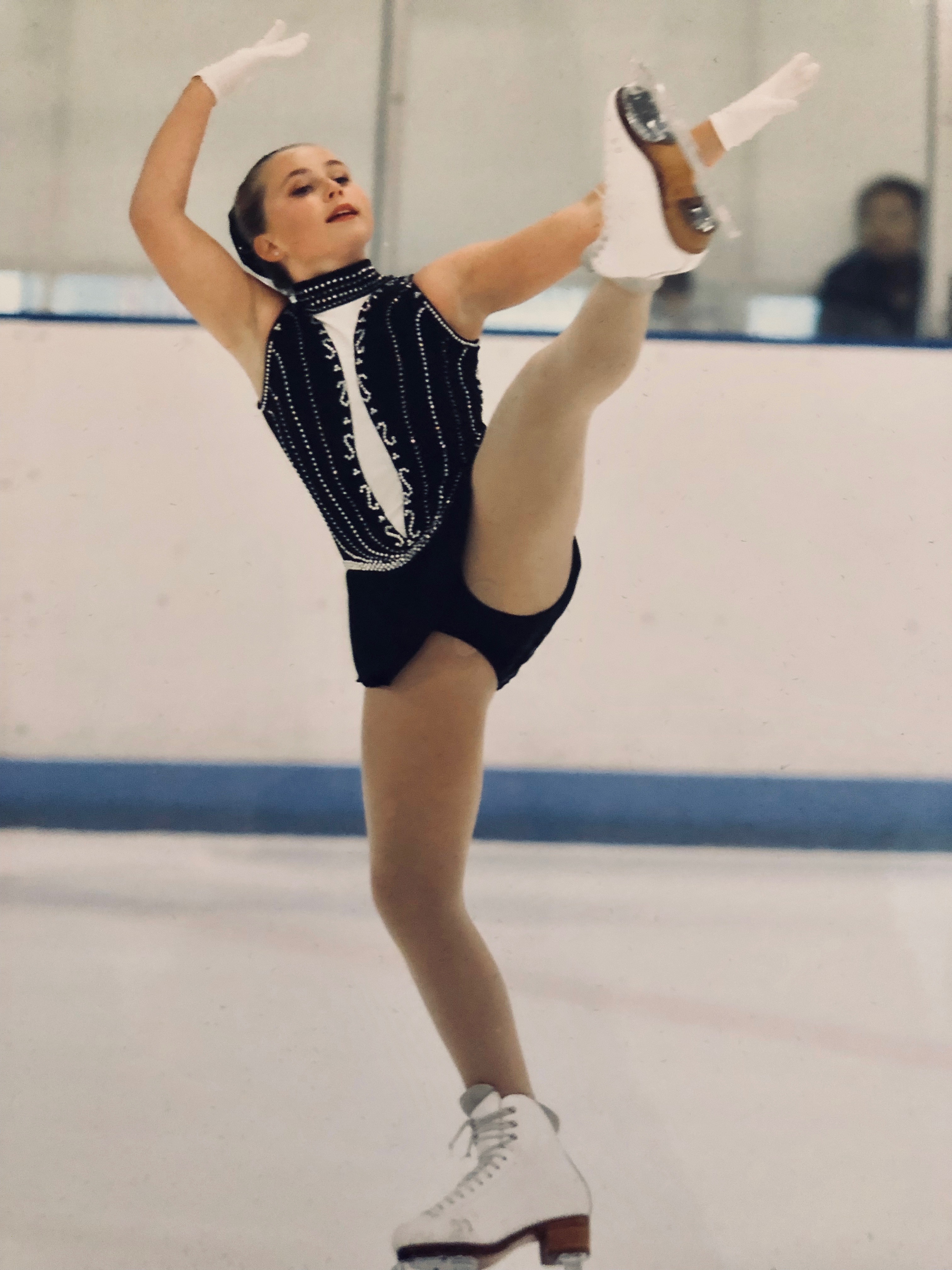
Reprinted with permission of Amy Entwistle, www.centralcarolinasc.com
Know where skaters are likely to jump Avoid standing, spinning or teaching in the lutz corners or near the boards where edge jumps
will take place. For right handed skaters, this is to the left of the main entrance and, similarly, in a zone down by the zamboni
entrance
Look out for the people who aren't looking out for you (and give them extra space) Some circumstances when someone might
not be looking out for you:
Programs: Complicated choreography and fatigue make it more difficult to avoid collisions. Learn to listen
to the music and know which music goes with which skater. After some time, it's also possible to learn some of the patterns in others'
programs, e.g. a straight line diagonal footwork sequence goes with the boom/boom/boom part of the music, etc.
Lessons: Skaters are
often looking at their coach when they would otherwise be looking around the ice. Attention is divided.
Dance or Pairs: It is much
more difficult for skaters to stop or change directions quickly when skating in pairs. Again, attention is divided.
Spins: You can't
see a thing when you're spinning. Never skate close to a spinning skater, even if your music is playing (see next point about right-of-way).
Always give spinners enough space to change positions into a camel spin (e.g. don't skate close to a scratch spin because it may not
be a scratch spin anymore when you get there).
Bad Day or Generally Clueless: Or -- any other distraction where a skater isn't actively
looking around at traffic flow on the ice. These phenomena span all ages and abilities.
Right of way goes to the skater who doesn't
see the potential for a collision We all try to give way to skaters performing programs or taking lessons, but safety is the most
important factor. Just because your music is playing doesn't give you the right to put anyone in danger. This is a bit of a non-traditional
way of thinking about "right of way" but it's really important. It's not uncommon to see younger skaters following their program pattern
directly into (or very near) someone else's camel spin because they believe they have the "right-of-way." Or, equally unsafe, more
advanced skaters sometimes barrel through a program when there are too many little ones who are unable to get out of the way. Adjustments
have to be made in the name of safety.
Communicate with and teach inexperienced skaters If someone is in your way, simply asking them
to move is the quickest, safest and friendliest way to make space on the ice. Younger or inexperienced skaters often don't know they
are in the way. If an advanced skater tells them, for example, what jump they're working on and what direction they'll be coming from,
the inexperienced skater will (a) get out of the way and (b) learn a bit about traffic flow. This is much more effective than scaring
the living daylights out of someone (young or old). Everyone has responsibility for making the ice a safe space. Friendly advice is
usually very well received.
Chit-chat in safe spaces Good options include - off the ice, in the hockey boxes, or near the CD player.
Avoid skater-parent conversations near the lobby end of the rink. A skater (on the ice) talking with a parent (who is sitting on one
of the benches) -- ssentially makes that entire end of the ice unsafe for jumping, particularly for advanced skaters. There is a very
high likelihood that the kid will start skating away (in an unpredictable direction) while still looking at the parent. There is very
high potential for collision in this circumstance. Good traffic flow can be facilitated by parents/fans as well as skaters.